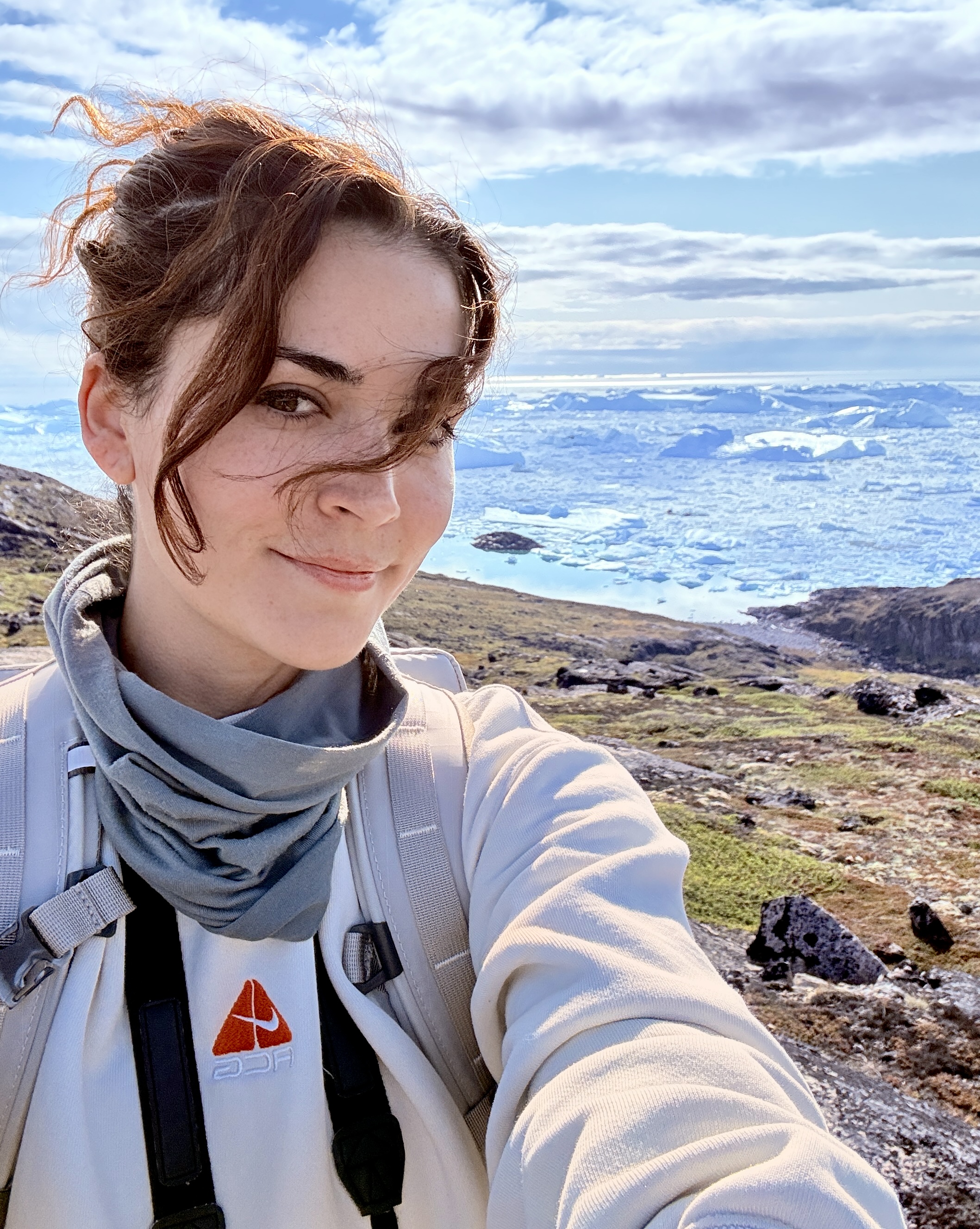
Michalea King Glaciology · University of Washington, APL Polar Science Center

Glaciology · Remote sensing · Greenland · Antarctica

Observing and understanding polar ice sheet change.

I'm Michalea King, a glaciologist studying how large outlet glaciers flow, calve, and drain ice into the surrounding ocean. Using a combination of satellite remote sensing, field observations, and modeling, my colleagues and I aim to better measure and understand how changes along the dynamic margins can impact ice sheet stability.

Research Projects

More Research and links →

Mapping Greenland interior ice flow with NISAR

How calving at marine-terminating outlet glaciers drives transitions in subglacial hydrology. This thread pairs satellite remote sensing with ice-sheet modelling, including science questions enabled by NISAR (the NASA-ISRO Synthetic Aperture Radar mission). This research is supported by NASA Cryosphere.

  • NASA
  • Remote sensing
  • Ice-sheet modelling
  • ISSM

Antarctic Mass Balance

How calving at marine-terminating outlet glaciers drives transitions in subglacial hydrology. This thread pairs satellite remote sensing with ice-sheet modelling, including science questions enabled by NISAR (the NASA-ISRO Synthetic Aperture Radar mission). This research is supported by NASA Cryosphere.

  • NASA
  • Remote sensing
  • Ice-sheet modelling
  • ISSM

Modeling subglacial hydrology and seasonal velocity in Greenland

How calving at marine-terminating outlet glaciers drives transitions in subglacial hydrology. This thread pairs satellite remote sensing with ice-sheet modelling, including science questions enabled by NISAR (the NASA-ISRO Synthetic Aperture Radar mission). This research is supported by NASA Cryosphere and led by PI Jessica Badgeley, APL Polar Science Center.

  • NASA
  • Remote sensing
  • Ice-sheet modelling
  • ISSM

Mapping mélange in Greenland fjords

This works adapts glacier velocity mapping techniques to better understand the spatiotemporal variability of ice mélange, the dense mix of icebergs and sea ice packed into glacial fjords, and how it couples to terminus stability and calving at the ice-ocean boundary. This research is supported by NSF Arctic Natural Sciences.

  • Fjord processes
  • Calving

Seasonal glacier dynamics using ICESat-2

Seasonal patterns in glacier terminus position and the hydraulic-potential fields that route water beneath the ice, built into reproducible tools for tracing meltwater pathways from bed and surface topography. This research is supported by NASA A.32: Studies with ICESat-2.

  • Seasonality
  • Meltwater routing

Select Recent publications

See more →
  1. 2026

    Mass balance of the Greenland and Antarctic ice sheets from the 1970s to 2023.

    Otosaka, I., and IMBIE Team including King, M. D. · Sci Data, 13, 1301.

    DOI →
  2. 2026

    Sudden collapse of ice mélange under increasing submarine melt at tidewater glaciers.

    Summers, P., Robel, A., Jackson, R., King, M. D., Amundson, J., Burton, J. · Accepted, Nature Communications.

  3. 2026

    ICESat-2 land ice products resolve Greenland and Antarctic ice sheet height changes on seasonal to multiyear time scales.

    Smith, B. E., and NASA ICESat-2 Land Ice Science Team, including King, M. D. · Journal of Glaciology, 72, e63.

    DOI →
  4. 2025

    Increased crevassing across accelerating Greenland Ice Sheet margins.

    Chudley, T., Howat, I., King, M. D., MacKie, E. · Nat. Geosci., 18, 148–153.

    DOI →
  5. 2020

    Dynamic ice loss from the Greenland Ice Sheet driven by sustained glacier retreat.

    King, M. D., Howat, I. M., Candela, S. G., Jeong, S., Noh, M. J., Noël, B., van den Broeke, M. R., Wouters, B., and Negrete, A. · Nature Communications Earth & Environment, 1, 1.

    DOI →